Tag: Emergency Preparedness

  • The King of EDC

    Every Day Carry (EDC) is an intriguing intersection of two worlds: the gear enthusiasts and the prepping community. It’s about being prepared to face the challenges that life throws at you, armed with a collection of practical, useful, and sometimes life-saving items that you carry around daily. My fascination with EDC is rooted in this idea of preparedness, coupled with the appeal of tasteful and functional gear. Over the years, my choice of EDC items has evolved, influenced by my surroundings, work environment, or travel destinations. In this article, I’ll share the details of my personal EDC, as well as some additional items I occasionally include.
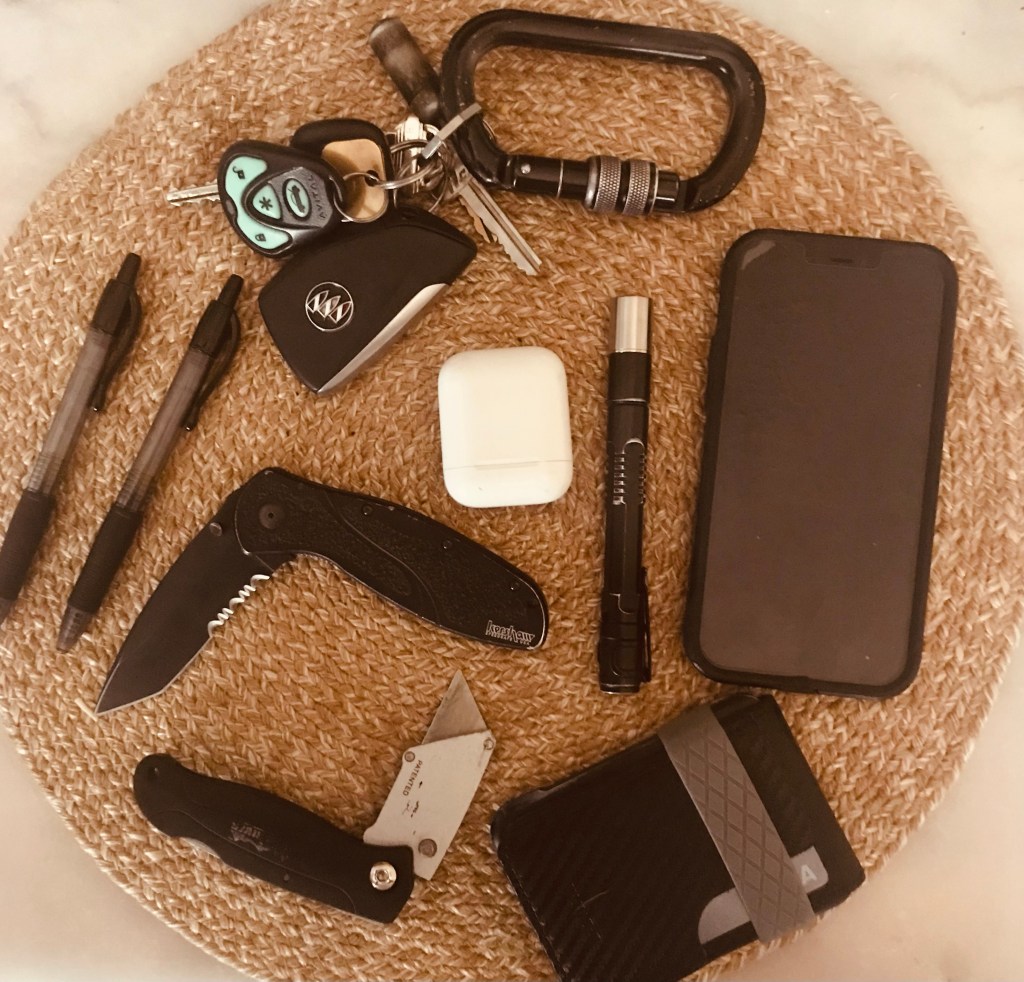
    My EDC
    1. Carabiner – More than just a metallic loop with a spring-loaded gate, my carabiner is an indispensable part of my EDC. It securely holds my keys, Key chain pillbox , and sometimes, a Leatherman Squirt multi-tool. The pill box packs a crisp fifty-dollar bill for emergencies. The carabiner is a prime example of the functional, yet tasteful gear that makes EDC so appealing.
    2. Bright strike flashlight – A reliable source of light is essential for preparedness. My choice is the Bright Strike EPLI flashlight, known for its high intensity, durable design, and compact size. It’s ideal for navigating in the dark or signaling for help in emergencies.
    3. Kershaw Folding Knife – A knife is a versatile tool for everyday use, and the Kershaw folder doesn’t disappoint. It features a tanto-tipped blade with serrations that provide a superior cutting edge for a variety of tasks. It’s a reliable companion that can help you overcome unexpected challenges.
    4. Pilot Gel Pens – I carry two Pilot gel pens, chosen for their bold tips and the smooth, uninterrupted flow of the gel. Whether it’s jotting down a quick note, sketching an idea, or signing a check, these pens deliver every time.
    5. Rock River Folding Razor Blade Utility Knife – This is a tool for the pragmatist. As a wise man once advised me, “It’s sharp and when it gets dull, I switch out the blade.” It made sense and I adopted the practice.
    6. Apple Watch – Emerging from a need to navigate city streets without being engrossed in my phone, my Apple Watch offers GPS directions and much more. It promotes situational awareness, keeping me informed and alert without distracting me from my surroundings.
    7. AirPods – Music, podcasts, or calls on the go, my AirPods are a compact solution for my audio needs. They link seamlessly with my other devices, providing clear, high-quality sound, and hands-free communication.
    8. Muradin Tactical Folding Wallet – To carry my cards and cash, I use a Muradin wallet. It’s slim, stylish, and designed with an emphasis on security and convenience.

    When I need to carry a firearm for additional security, my EDC expands to include a 5.11 Tactical Holster Shirt and a Glock 19. The shirt provides a concealed, comfortable carry solution, and the Glock 19 is renowned for its reliability and compact design.

    My EDC is not just a random assortment of items; it’s a collection that reflects my lifestyle, needs, and the scenarios I might encounter. It’s about being prepared and maintaining a sense of style and personal expression. Keep in mind, your EDC should be tailored to your individual needs, environment, and comfort. The goal isn’t to carry everything you own but to carry what you might need to navigate the uncertainties of daily life effectively and efficiently.

    Remember, the essence of EDC is not just about the physical items you carry, but the mindset of preparedness they represent. It’s a lifestyle choice that embraces the idea that with the right tools and preparation, we can better handle whatever life throws at us.

    Whether you’re new to the concept of EDC or an experienced enthusiast, I hope my personal EDC setup inspires you to think about your own. It’s a continuous journey of adaptation and refinement, shaped by our experiences and the changing world around us. As you embark or continue on your EDC journey, remember to balance functionality, practicality, and personal style.


  • In today’s unpredictable world, being prepared for emergencies is not just prudent, it’s essential. One of the key steps you can take towards this preparedness is creating a “get home bag” – a bag filled with essential supplies that can help you safely return home in case of an unexpected crisis.

    A “get home bag” is typically kept in your vehicle or at your workplace and is packed with enough provisions to sustain you for a journey back home, which could be anywhere from a few hours to several days, depending on your situation. It’s not a full-blown survival kit, but a practical collection of items that will aid you in navigating common emergency scenarios.

    The concept of a “get home bag” is built on preparedness and foresight. It’s about asking yourself, “What would I need if I had to make it home on foot over the next 48 to 72 hours?” The answer to this question will help you determine what to pack in your bag. Remember, the idea is to keep the bag light and practical, packing only what you need to get home safely.

    Now that we understand the concept and importance of a “get home bag,” let’s talk about the bag itself. There are countless options out there, but the one that has served me incredibly well for over a years is the Oakley Kitchen Sink Bag.

    The Oakley Kitchen Sink Bag is an impressive blend of design and functionality, making it an ideal choice for a “get home bag”. Here are the key features of this bag that make it a perfect fit for this purpose:

    My “Get Home Bag”
    1. Durability: Made with 69% Nylon and 31% Polyester, this backpack is tough and built to last. The material is hard-wearing and can withstand rough conditions, making it a reliable companion for any emergency situation.
    2. Spacious: With dimensions of 20″ H x 14″ W x 8″ D, the bag provides ample space for all your essentials – food, tools, shelter, and water purification systems. It has a capacity of 34L, which is more than sufficient for a 48 to 72-hour journey.
    3. Organized Compartments: The bag features several compartments including a bottom shoe compartment, a padded laptop sleeve that can accommodate up to a 17″ laptop, and side-access front pocket for quick access to essentials. This makes it easy to organize your gear and reduces the time spent searching for items in an emergency.
    4. Comfort: The bag is designed with a padded back and adjustable mesh-lined shoulder straps which provide comfort during long periods of carriage. It also has a sternum strap for added stability.
    5. Stealthy Design: The Oakley Kitchen Sink Bag does not have an overtly tactical look to it. Instead, it merges utility and style, making it a versatile choice that can blend into an urban environment while still being fully functional.
    6. Additional Features: The bag also features a compression-molded back panel and shoulder straps for enhanced comfort, a mobile phone pocket, a mix of red code for increased color contrast, and a brushed media pocket on top for protective storage.

    In sum, the Oakley Kitchen Sink Bag is an excellent choice for a “get home bag”. It’s sturdy, spacious, and has enough compartments to keep your emergency supplies organized. It also has the added advantage of not looking too tactical, making it an unassuming yet highly practical bag to keep with you in case of emergencies.

    To get your own Oakley Kitchen Sink Bag, check it out on Amazon here: Oakley Kitchen Sink Bag.

    Remember, preparedness is not about being paranoid, it’s about being proactive. And having a well-equipped “get home bag” is a practical and effective step towards that.

  • Create an emergency preparedness plan.

    The Walking Dead Taps into our innate emotions surrounding survival.

    In 2011 the CDC published an article on zombie preparedness ( found here https://stacks.cdc.gov/view/cdc/6023) as educational entertainment. The point they raise is that if you’re prepared for the zombie apocalypse, you’ll be prepared for anything. It’s a bit extreme but the sentiment is not lost to me.

    In our modern world, it’s easy to take our comfortable lives for granted, assuming that the status quo will persist indefinitely. This mindset, however, can leave us ill-prepared in face of emergencies – a fact that became glaringly evident during the COVID-19 pandemic when supply chains faltered and grocery store shelves ran empty.

    Natural disasters, too, serve as stark reminders of our vulnerability. Whether it’s flooding, earthquakes, or wildfires, like the recent ones in Maui, the need for emergency preparedness can’t be overstated.

    The thought of setting up an emergency action plan may seem daunting, but it’s essential to our safety and well-being. While you can’t prepare for every possible scenario, it’s worthwhile to consider the most likely situations that could impact you or your family. This act of preparedness aligns closely with living assiduously – living with constant and earnest effort.

    Consider what kind of emergencies are most likely to occur in your area. Is it a house fire? Earthquakes? Tornadoes? Floods? Identifying these potential threats helps you prepare in a way that minimizes their emotional and psychological impacts.

    For instance, if you live in a tornado-prone area, it’s important to have a shelter and to know where it is. Your shelter should be stocked with vital supplies like water, batteries, a first aid kit, a weather radio, and non-perishable snack items. If sheltering in place isn’t possible, you should know where to go and what supplies you’d need to get there. Having a “bug out bag” (BOB) for quick evacuations would be a prudent move.

    I recall a severe thunderstorm that hit our town without much warning. We took shelter in our basement just as the town’s tornado sirens sounded. Despite my interest in disaster preparedness, I found myself underprepared. My weather radio was dead, and I had no supplies in the shelter. However, I had a “get home bag” filled with essential items, including a hand-cranked weather radio and flashlights, that proved immensely useful.

    This experience taught me the importance of redundancy, embodied in the rule of two: “Two is one and one is none.” Having two weather radios meant that when one failed, I still had another.

    This leads us to Murphy’s Law: “Everything that can go wrong, will go wrong.” Keeping this in mind while preparing for emergencies can help you identify potential weaknesses in your plans.

    The final concept I’d like to introduce is the five “P’s”: Prior Planning Prevents Poor Performance. Being prepared in advance can save you from panic in the heat of an emergency, allowing you to focus on getting to safety.

    Of course, emergencies aren’t limited to natural disasters. Job loss….sudden death, unexpected hospitalization, house fires, winter storms – all these demand preparation. It’s crucial to be honest with yourself about what’s likely to happen and focus your efforts accordingly.

    Start with the basics. The Centers for Disease Control and Prevention (CDC) and the American Red Cross offer valuable articles and resources on emergency preparedness. (CDC, American Red Cross). These are good places to start your research with resources available to guid you.

    In future articles, I’ll delve deeper into topics such as the “bug out bag” and the “get home bag”. However, for now, let’s focus on the fundamentals of being prepared.

    Emergency preparedness is a broad topic and one that’s close to my heart. It’s a process of continuous learning, adaptation, and above all, vigilance. The true essence of preparedness isn’t about living in constant fear but about being ready to face any situation with confidence and composure.

    So, let’s strive to live assiduously, with an understanding of the uncertainties around us and the resilience to handle whatever comes our way. As we learn and grow in our preparedness journey, we’ll share more insights and practical tips to help each other.

    Remember, preparedness is not just about survival; it’s about thriving in the face of adversity. So, let’s take this journey together, one step at a time. Stay prepared, stay strong, and stay assiduous.