Create an emergency preparedness plan.
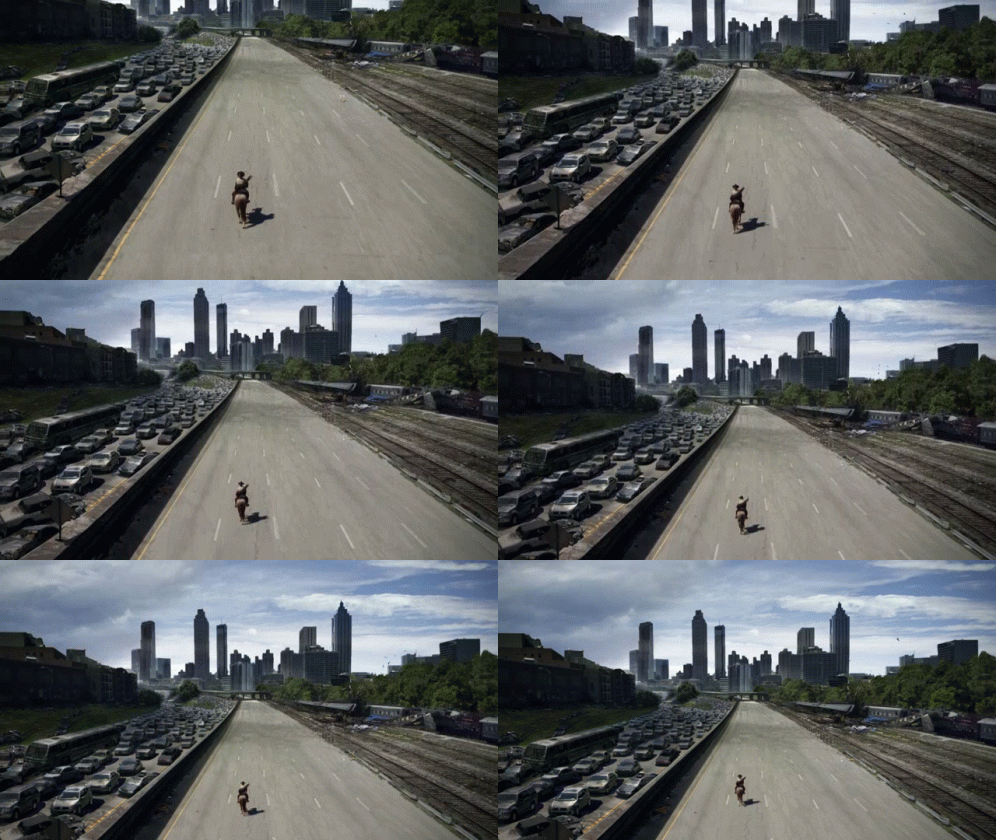
In 2011 the CDC published an article on zombie preparedness ( found here https://stacks.cdc.gov/view/cdc/6023) as educational entertainment. The point they raise is that if you’re prepared for the zombie apocalypse, you’ll be prepared for anything. It’s a bit extreme but the sentiment is not lost to me.
In our modern world, it’s easy to take our comfortable lives for granted, assuming that the status quo will persist indefinitely. This mindset, however, can leave us ill-prepared in face of emergencies – a fact that became glaringly evident during the COVID-19 pandemic when supply chains faltered and grocery store shelves ran empty.
Natural disasters, too, serve as stark reminders of our vulnerability. Whether it’s flooding, earthquakes, or wildfires, like the recent ones in Maui, the need for emergency preparedness can’t be overstated.
The thought of setting up an emergency action plan may seem daunting, but it’s essential to our safety and well-being. While you can’t prepare for every possible scenario, it’s worthwhile to consider the most likely situations that could impact you or your family. This act of preparedness aligns closely with living assiduously – living with constant and earnest effort.
Consider what kind of emergencies are most likely to occur in your area. Is it a house fire? Earthquakes? Tornadoes? Floods? Identifying these potential threats helps you prepare in a way that minimizes their emotional and psychological impacts.
For instance, if you live in a tornado-prone area, it’s important to have a shelter and to know where it is. Your shelter should be stocked with vital supplies like water, batteries, a first aid kit, a weather radio, and non-perishable snack items. If sheltering in place isn’t possible, you should know where to go and what supplies you’d need to get there. Having a “bug out bag” (BOB) for quick evacuations would be a prudent move.
I recall a severe thunderstorm that hit our town without much warning. We took shelter in our basement just as the town’s tornado sirens sounded. Despite my interest in disaster preparedness, I found myself underprepared. My weather radio was dead, and I had no supplies in the shelter. However, I had a “get home bag” filled with essential items, including a hand-cranked weather radio and flashlights, that proved immensely useful.
This experience taught me the importance of redundancy, embodied in the rule of two: “Two is one and one is none.” Having two weather radios meant that when one failed, I still had another.
This leads us to Murphy’s Law: “Everything that can go wrong, will go wrong.” Keeping this in mind while preparing for emergencies can help you identify potential weaknesses in your plans.
The final concept I’d like to introduce is the five “P’s”: Prior Planning Prevents Poor Performance. Being prepared in advance can save you from panic in the heat of an emergency, allowing you to focus on getting to safety.
Of course, emergencies aren’t limited to natural disasters. Job loss….sudden death, unexpected hospitalization, house fires, winter storms – all these demand preparation. It’s crucial to be honest with yourself about what’s likely to happen and focus your efforts accordingly.
Start with the basics. The Centers for Disease Control and Prevention (CDC) and the American Red Cross offer valuable articles and resources on emergency preparedness. (CDC, American Red Cross). These are good places to start your research with resources available to guid you.
In future articles, I’ll delve deeper into topics such as the “bug out bag” and the “get home bag”. However, for now, let’s focus on the fundamentals of being prepared.
Emergency preparedness is a broad topic and one that’s close to my heart. It’s a process of continuous learning, adaptation, and above all, vigilance. The true essence of preparedness isn’t about living in constant fear but about being ready to face any situation with confidence and composure.
So, let’s strive to live assiduously, with an understanding of the uncertainties around us and the resilience to handle whatever comes our way. As we learn and grow in our preparedness journey, we’ll share more insights and practical tips to help each other.
Remember, preparedness is not just about survival; it’s about thriving in the face of adversity. So, let’s take this journey together, one step at a time. Stay prepared, stay strong, and stay assiduous.
 Assiduous
Leave a comment